About the Journal

Open Access Peer-reviewed


The Journal of Infectious Diseases and Pneumology (JIDP) is a peer-reviewed, open-access journal that focuses on publishing high-quality research articles, review articles, communications, and short notes in the fields of infectious diseases and respiratory physiology. The journal aims to advance the understanding and management of infectious diseases and their impact on the respiratory system.

Current Issue

Vol. 1 No. 1 (2025): JIDP

The inaugural issue of JIDP represents a major step forward in promoting open access to high-quality research on infectious and respiratory diseases. This issue highlights our commitment to advancing scientific knowledge, fostering collaboration, and addressing global health challenges. By offering unrestricted access under the Creative Commons Attribution 4.0 License, JIDP ensures that knowledge is shared freely to benefit the global community.


Published: 29-12-2024

Editorials

  • Community Engagement in the Fight Against Tuberculosis: A Global Priority

    Aboubacar Sidiki Magassouba
    Abstract

    Tuberculosis (TB) remains one of the leading causes of death worldwide, particularly in low-resource settings. Despite advancements in prevention, diagnosis, and treatment, the disease's eradication continues to face significant challenges. Community engagement is a vital yet underutilized strategy in TB control, offering the potential to tailor global initiatives to local contexts for greater impact. This editorial highlights the essential roles of communities in raising awareness, reducing stigma, supporting early diagnosis, and improving treatment adherence. Furthermore, it underscores the importance of capacity-building initiatives such as community health committees, which foster collaboration between health systems and local populations. By prioritizing community involvement, global TB strategies can achieve more sustainable outcomes and accelerate progress toward eradicating the disease.

  • Addressing the Challenge of HIV Infection Among Pregnant Women in Guinea: Efforts in Preventing Mother-to-Child Transmission and Future Perspectives

    ANSOUMANE KOUROUMA
    Abstract

    Addressing the challenge of HIV infection among pregnant women in Guinea requires a multifaceted approach to prevent mother-to-child transmission (MTCT). With a prevalence rate of 1.0% in the adult population and a vertical transmission rate of 14.9%, Guinea has implemented key measures, including enhanced antiretroviral therapy (ART) coverage, prenatal HIV testing, and community-based initiatives like the "Mentor Mothers" program. Despite significant progress, barriers such as limited healthcare access, stigma, and inadequate male involvement persist. This paper outlines current efforts, challenges, and future strategies to eliminate MTCT, emphasizing healthcare system strengthening, community engagement, data-driven approaches, and sustainable funding. Achieving the UNAIDS targets requires sustained collaboration and investment, ensuring healthier outcomes for mothers and children while advancing global HIV/AIDS eradication goals.

  • Multidimensional impact of tuberculosis on quality of life: physical, psychological, social and economic aspects

    Abdoulaye Fode TOURE
    Abstract

    Tuberculosis (TB) remains a major public health problem, causing significant morbidity and mortality despite diagnostic and therapeutic advances. In 2022, WHO estimated that 10.6 million people worldwide had contracted the disease, with Africa being the most affected region with a prevalence of 237 cases per 100,000 inhabitants. In Guinea, the incidence is 179 per 100,000 inhabitants with 18,960 confirmed cases in 2021.

    The quality of life of TB patients is profoundly impaired, affecting their physical, mental, social and economic dimensions. Various tools, such as the SF-36 and the EQ-5D, make it possible to assess these impacts in a multidimensional manner. Social stigma, psychological reactions (anxiety, isolation) and economic burden aggravate the situation of patients, particularly in developing countries. Comorbidities, such as diabetes, further complicate their quality of life.

    Sexual health, although rarely addressed, is also affected. Patients are generally non-contagious after three weeks of treatment, but initial precautions are recommended. Finally, a comprehensive approach, taking into account these multidimensional impacts, is essential to improve interventions and management.

  • HIV awareness among people with disabilities

    Abdoulaye Diallo
    Abstract

    More than one billion people around the world live with disabilities, with most of them in low- and middle-income countries. These individuals face many challenges that only make social and economic inequalities worse. As a result, people with disabilities are more likely to live in poverty and are especially at risk of  HIV/AIDS. They often deal with a mix of risk factors like poverty, sexual violence, and limited access to healthcare services.

    Women with disabilities, in particular, face a triple burden—they not only have to contend with the challenges of their disability and gender but also find themselves primarily excluded from HIV prevention campaigns and healthcare services.

    Access to reliable information about HIV/AIDS is a major barrier with significant concern. Traditional prevention efforts often fail to take into account the needs of people with disabilities by failing to provide materials in accessible formats, such as Braille, sign language or plain text. In addition, a harmful misconception that people with disabilities are asexual further marginalizes them in public health debates.

    The risk of sexual violence increases the level of additional vulnerability, increasing their risk of HIV infection. In addition, structural and institutional barriers often prevent these people from receiving appropriate care and testing services. Because of these significant challenges, it’s crucial to develop HIV education and prevention programs that are tailored specifically for people with disabilities. Evidence shows that when these programs consider socioeconomic factors and the unique needs related to different types of disabilities, they can effectively boost awareness and reduce risky behaviours.

    Improving access to information and quality sexual and reproductive health services for people with disabilities is very important for reducing health inequalities and moving towards universal health coverage. Integrating these communities fully into global HIV/AIDS strategies is a necessary step in achieving this goal.

  • Problem of setting up a clinico-environmental predictive model for early detection of tuberculosis in Guinea

    Younoussa SYLLA, Aboubacar Sidiki MAGASSOUBA, Almamy Amara Touré, Moussa SOUMAH, Mamadou Oury DIALLO
    Abstract

    Tuberculosis remains a major cause of morbidity and mortality worldwide, particularly in resource-limited countries such as Guinea, where the incidence was 175 cases per 100,000 inhabitants in 2021. Early detection of tuberculosis is hampered by unequal access to care, inadequate health infrastructures and low awareness among the population.

    This editorial explores the development of a clinico-environmental predictive model for early detection of tuberculosis in Guinea. This model integrates clinical factors (duration of cough, HIV status) and environmental factors (promiscuity, pollution) to identify high-risk individuals. The aim is to make screening more effective by targeting vulnerable populations and optimizing resource allocation.

    International experience shows that the integration of clinical and environmental variables improves tuberculosis detection, notably in China and other low-resource countries. In Guinea, a model based on spatial and socio-demographic data could enable better identification of epidemic outbreaks and strategic orientation of public health interventions.

    However, several challenges remain, including the collection of reliable data, validation of the model in the Guinean context, and socio-cultural barriers linked to the stigmatization of screening. A participatory approach involving communities and a clear ethical framework are essential to guarantee the acceptability and effectiveness of this strategy.

    The development of a predictive model adapted to the Guinean context represents an opportunity to strengthen the fight against tuberculosis. Its implementation will require political commitment, investment in infrastructure and integration into national public health strategies in order to maximize its impact on reducing the incidence of the disease.

  • Livre des résumés des Premières Journées de Pneumologie en Guinée

    Abstract

    Les infections respiratoires basses, dont la tuberculose pulmonaire représente une part significative, constituent un défi majeur de santé publique, en particulier dans les pays à ressources limitées. Ce congrès, placé sous le thème « Tuberculose et infections respiratoires basses », vise à réunir professionnels de santé, chercheurs, décideurs politiques et partenaires techniques autour des enjeux liés à la prévention, au diagnostic, à la prise en charge et à la surveillance de ces affections. À travers des présentations scientifiques, des échanges d’expériences cliniques et des discussions pluridisciplinaires, les participants exploreront les avancées récentes, les obstacles persistants et les pistes innovantes pour améliorer la lutte contre ces maladies respiratoires, souvent négligées mais fortement meurtrières. L’événement s’inscrit dans une dynamique de renforcement des capacités nationales et de promotion d’approches intégrées, centrées sur le patient et fondées sur des données probantes.

  • Livre des résumés des deuxièmes journées de pneumologie en Guinée, 2025

View All Issues

Announcements

Call for Manuscript Submissions: JIDP

19-02-2025
Dear Researchers, We invite you to submit your original research articles, review articles, communications, and short notes to the Journal of Infectious Diseases and Pneumology (JIDP), a peer-reviewed, open-access journal dedicated to advancing knowledge in infectious diseases and respiratory health. Why Publish with JIDP? JIDP offers global reach through open access under the Creative Commons Attribution 4.0 License, ensuring your work is accessible worldwide. We welcome submissions on a variety of topics from tuberculosis to public health, providing an opportunity for your research to have a significant impact on global health challenges. Our journal provides a supportive environment with comprehensive author guidelines to assist you through the submission process. Submission Categories: We accept submissions in several categories including Original Research, Reviews, Case Reports, and Epidemiology. Your work can contribute to our understanding and management of infectious diseases and their respiratory impacts. How to Submit: To submit your manuscript, please visit our submission page at this link. Key Information: Our inaugural issue, Vol. 1 No. 1 (2025), was published on 29-12-2024. For any inquiries, you can contact us at support@sciencejournalhub.org. Join Us: Your contribution to JIDP can help shape the future of infectious disease and respiratory health management on a global scale. We look forward to your submissions. Sincerely, The Editorial Team, JIDP Read more about Call for Manuscript Submissions: JIDP
 

Past Issues

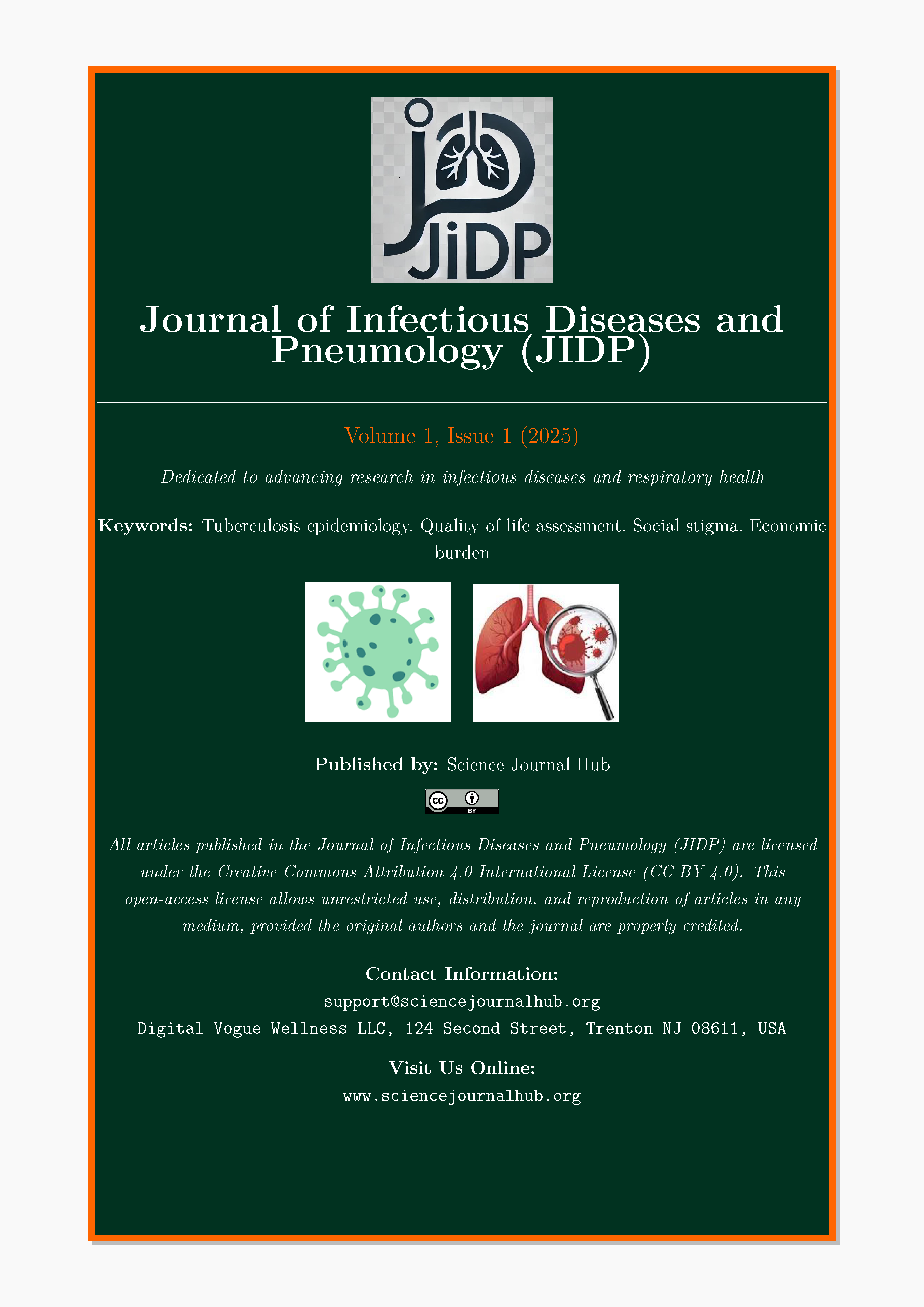
Cover for Vol 1, No 1

Vol 1, No 1 (2025) September 2025

Read issue
Cover for Vol 29, No 2

Vol 1, No 2 (20xx) June 20xx

Read issue
Cover for Vol 29, No 1

Vol 1, No 3 (20xx) March 20xx

Read issue

Explore the latest insights from our journal with these recent issues. Each volume offers a rich tapestry of multidisciplinary research, highlighting innovations in various fields of science. From groundbreaking studies in Vol 1, No 1 to the foundational work in Vol 1, No 2, our past issues provide a comprehensive view of the evolving landscape of scientific inquiry. For a deeper dive into our extensive collection, use the 'Browse full archive' link to access all published issues.